


Lights & Strobes
Free Shipping across Canada! All orders over $150
Orders Processed and Shipping Fast!
We are Canadian! Orders shipped from our Edmonton warehouse
High Quality Gear - Divemaster & Instructor tested and approved
Buy underwater photography and video lights in Canada — Sea Dragon video lights from Sealife, Big Blue video and photo lights, and accessories. Underwater lighting is the single most impactful upgrade you can make to underwater photography and video — it restores the colours that water absorbs at depth, eliminates the blue-green cast of ambient-only footage, and reveals the vivid marine life colours that brought you to the reef in the first place. Available from Sealife and Big Blue in a range of output levels and beam angles for every type of underwater shooting.
-

Replacement Battery - Sea Dragon Light Rechargeable Video Light 1200-3000
Sealife
$129.99Rechargeable lithium ion battery for the Sea Dragon Fluoro-Dual Beam, 1200F, 1500F, 2000F, 2100SF, 2300F Auto, 2500F, 3000SF Pro Dual Beam and 3000F Auto Photo/Video/Dive Lights. Keep a spare battery...2335$129.99 -
On SaleSTAFF FAVOURITE


Sea Dragon 2500 Video Light
Sealife
$629.89$667.00The Sea Dragon 2500 video light is made with flat panel COB LED technology designed to closely mimic natural sunlight. This will help bring out more natural colors in your underwater photos and...2786$629.89$667.00 -
On SaleTOP SELLER


Sea Dragon 3000SF Pro Dual Beam Light
Sealife
$799.99$826.00The Sea Dragon 3000SF Pro Dual Light is the underwater photographer and videographer's dream light! It has an impressive 3000 lumen wide beam that will make the colors underwater pop. It also boasts...4473$799.99$826.00 -


Sea Dragon 5000+ COB LED Photo-Video Light
Sealife
$879.95Ultimate underwater video and photo light that will provide professional quality lighting for all levels of underwater photographers. The Sea Dragon 5000+ with Color Boost combines red and white...4704$879.95 -

Battery Charger - Sea Dragon Video Light 1200-3000
Sealife
$59.95Replacement charger with cable for the Sea Dragon light batteries.3922$59.95 -


Sealife Sportdiver Red Filter for Blue Water
Sealife
$29.95Colour correction filter for the Sealife Sportdiver and Sportdiver Ultra will help reduce the blue color from your photos and video. Features: The red filter is ideal for blue water at depths...5111$29.95 -

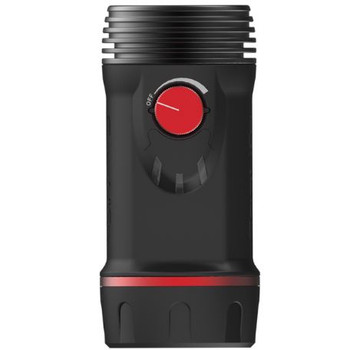
Sea Dragon 3000F with Color Boost
Sealife
$750.00This light is unique in that it also boasts an array of COB LED lights that emits a 120° wide beam. The light has a large dial to adjust from 300 to 3000 lumens and adjusts from white light (5000K...5023$750.00 -


Big Blue 1300 Wide Beam Light
Big Blue Lights
$279.95The Big Blue 1300 wide video light will provide maximum of 1300 lumens with a wide 85° beam. Perfect light to add some color to your underwater video or photos with action cameras like the GoPro...4449$279.95 -
On Sale

Sea Dragon Duo 6000 Lights
Sealife
$1,399.99$1,586.00Ensure maximum light underwater with the duo set of Sea Dragon 3000F lights. This light is unique in that it also boasts an array of COB LED lights that emits a 120° wide beam. The light has a large...3823$1,399.99$1,586.00 -


Big Blue 1800 Lumen Adjustable Beam Dive Light
Big Blue Lights
$514.99The Big Blue 1800 dive light with adjustable beam will provide maximum of 1300 lumens and can be adjusted underwater from a focused, narrow 7° spot beam to a wide 37° beam . Perfect for poking around...5024$514.99 -
STAFF FAVOURITE

Big Blue 2900 Light Spot/Flood
Big Blue Lights
$599.99The Big Blue VTL2900P dive light will provide dual beams including a wide 2900 lumens 100° beam and a 1000 lumen 10° narrow beam. It also features a 100 lumen red light that allows you to focus your...5162$599.99 -

Replacement Battery - Rechargeable Light Sea Dragon 4500/5000/5000+
Sealife
$299.99Rechargeable lithium ion battery for the Sea Dragon 4500F, 5000F, and 5000+ Photo/Video/Dive Lights. Keep a spare battery charged so you never miss an opportunity to capture that perfect shot...4282$299.99 -
On Sale


Sea Dragon Pro Set 10,000 Lumens - Flex Connect Setup
Sealife
$1,999.99$2,187.65Professional level lighting system for an amazing package price! Includes two Sea Dragon 5000+COB LED lights for a whopping 10,000 lumens of light. The Sealife Flex-Connect system is robust and easy...5297$1,999.99$2,187.65 -
On Sale


Sea Dragon Pro Set 10,000 Lumens - Tray, Arm, Clamp Setup
Sealife
$1,999.00$2,255.00Professional level lighting system for an amazing package price! Includes two Sea Dragon 5000+COB LED lights for a whopping 10,000 lumens of light. The Big Blue tray, grips, arms, and clamps are easy...CLAMP4704$1,999.00$2,255.00 -

Battery Charger - 18650/21700/26650/32650 Batteries
Big Blue Lights
$49.99This battery charger is designed to recharge a variety of battery sizes including 18650, 21700, 26650, 32650. Specifically for batteries used in several Big Blue lights.5441$49.99 -
On Sale


Sea Dragon Duo 5000 Lights
Sealife
$1,249.99$1,420.00Includes (click for details): 2 x Sea Dragon 2500 Video Light Easily expand with the Flex-Connect family of accessories including grips, arms, trays, and adapters. The Flex-Connect system...3835$1,249.99$1,420.00 -

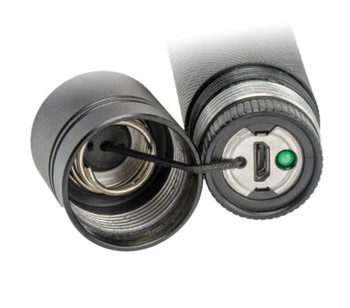
Tovatec 1500 Wide Beam Light USB
Tovatec
$199.99Super compact light has 1500 lumen with a 120 degree wide angle beam. The battery can be recharged directly in the light with a USB cable. Burn Time: 15425$199.99
What to look for in an underwater video or photo light
|
Output and beam angle — the two numbers that matter Sealife Sea Dragon vs. Big Blue — choosing between the two brands |
Single light vs. dual lights Positioning — offset the light from the lens axis |
Frequently asked questions
What is the difference between a video light and an underwater strobe for photography?
A video light (also called a continuous light) emits a constant beam that illuminates your subject for the full duration of your recording. It allows you to see exactly how the light is falling on the subject in real time and allows the camera's autofocus to work in low-light conditions. For video, continuous lighting is essential. For still photography, a dedicated underwater strobe (flash) fires a single, brief, extremely powerful burst of light at the moment of exposure — far brighter than any continuous light could maintain over time. The burst duration is short enough to freeze subject motion. Still photographers typically use strobes for the dramatic improvement in colour accuracy and subject sharpness they provide. Video shooters use continuous lights. Some divers who do both carry both types.
How wide a beam angle do I need for underwater video lighting?
For underwater video at typical shooting distances of 0.5 to 1.5 metres, a beam angle of at least 100 degrees provides even coverage without the distracting bright centre hotspot that narrower beams produce on video. Wide-angle video shooting with a dome port at closer distances may require 120 to 150-degree beam coverage for the entire frame to be illuminated evenly. For macro video shooting at very close distances (5 to 15cm), a narrower beam is acceptable because the subject area is small. Big Blue video lights in our range are available in wide-angle flood configurations specifically designed for even coverage in underwater video applications. Using a single video light positioned off-centre on a tray arm typically produces better results than a single centred light, which creates flat, shadow-free but dimensionless illumination.
What is a red focus light and why is it used for underwater photography?
A red focus light emits a continuous red beam used to assist camera autofocus in low-light conditions without activating the "flee response" in shy or sensitive marine life. Most fish and invertebrates cannot perceive red wavelengths well — what appears to us as a visible red beam is essentially invisible to most marine animals. A white continuous light of equivalent brightness would cause fish to dart away before the camera could focus and capture the shot. Red focus lights are particularly useful for macro photography of nudibranchs, shrimp, blennies, and other small, skittish subjects that are easily startled. Most Big Blue video lights and some standalone focus lights in our range include a red focus mode in addition to the primary white output.
Do I need a video light for shallow snorkeling photography?
In water shallower than about 3 metres with good sunlight overhead, natural light produces vivid, colourful images without supplemental lighting. As you descend beyond 5 metres, red and orange wavelengths begin disappearing and a video light becomes increasingly valuable for colour restoration. For snorkeling at the surface in tropical conditions, a video light is generally not needed. For any scuba photography deeper than 5 to 8 metres, even a modest video light of 1000 to 2000 lumens makes a visible difference in colour and image quality. For macro photography at any depth, a small video light or macro strobe dramatically improves both focus assistance and image quality regardless of depth.
What is backscatter and how do I prevent it in underwater photos?
Backscatter appears as white speckles or streaks across underwater images — caused by suspended particles (sand, plankton, marine snow) in the water column reflecting the camera's own light back into the lens. It is most severe when the light source is mounted directly in front of the camera lens, which maximises the return of reflected light. The primary prevention is to move the light source away from the lens on an arm — the farther the light is offset from the lens axis, the more the reflected light from particles travels away from the camera rather than back into it. Shooting with good buoyancy so you do not stir up sand is equally important. In water with very high particle content (common in Canadian lakes), even well-positioned lights cannot fully eliminate backscatter — shooting upward at subjects against the blue-lit water column minimises the particle volume between camera and subject.