


First & Second Stages
Free Shipping across Canada! All orders over $150
Orders Processed and Shipping Fast!
We are Canadian! Orders shipped from our Edmonton warehouse
High Quality Gear - Divemaster & Instructor tested and approved
Buy individual scuba regulator first stages and second stages in Canada — standalone components for divers building a custom regulator configuration, upgrading an existing setup, or adding a backup regulator to their kit. First stages available in yoke and DIN configurations, balanced piston and balanced diaphragm designs, and environmentally sealed models for cold water diving. Second stages include primary and backup (octopus) options from Scubapro, Cressi, and Scuba Force. Looking for a complete ready-to-dive system? See our regulator packages. .
-


Scubapro R105 Octopus Regulator
Scubapro
$332.99The Scubapro R105 scuba diving second stage octopus is pre-tuned to the optimum inhalation volume for safe and uncomplicated use. Simple construction yet very reliable. Features: Downstream...5071$332.99 -

Scubapro AIR 2 Alternate Inflation Regulator
Scubapro
$479.99Add the Air2 upgrade to any Scubapro BCD. The Scubapro Air2 5th generation combines your inflator and backup octo into 1 unit, eliminating the need for a secondary second stage regulator (octo)...3638$479.99 -

Cressi Octopus Compact
Cressi
$229.99The Cressi Compact Octopus is a featherweight second stage built with lightweight techno-polymers to reduce jaw fatigue. Geared for warm water, this is the perfect backup regulator for the traveling...4919$229.99 -

Cressi MC9 / Compact / Octo / Digi2 Regulator Package
Cressi
$1,229.93This regulator package includes: Cressi MC-9 / Compact Regulator Set Cressi Compact OctopusBUND0040$1,229.93 -

Cressi T10-SC Cromo / Galaxy-R Regulator Set
Cressi
$999.95The Cressi T10-SC Cromo / Galaxy-R regulator set is a very high performance regulator. Perfect for experience and professional divers who want simple design without compromising quality and high...4920$999.95 -

Scuba Force Black Devil DIN Stage Bottle Set
Scuba Force
$1,099.99The Black Devil stage bottle regulator package designed for use with any size cylinder for deco diving or extended range scuba diving. Use with a pony bottle as a backup system. Features: First...4799$1,099.99 -

Cressi MC9 / Compact Regulator Set
Cressi
$649.99The Cressi MC9 / Compact regulator set is perfect for beginners and warm water travelers. It's compact and lightweight while maintaining high standards of the warm water scuba diver...4921$649.99 -

Scubapro MK19 EVO DIN First Stage
Scubapro
$749.99This first stage DIN scuba regulator is ideal for every condition from recreational to tech, cold to warm temperatures, clear water to muddy, silty or rusty water. The first stage is completely...5344$749.99 -
On Sale


Cressi Aquawing Max BCD with MC9 Compact Regulator Package
Cressi
$2,474.99$2,574.98The brand new Cressi Aquawing MAX BCD is a great light weight and compact option for wing and harness system. Paired with the Cressi MC9 Compact regulator this ideal for the traveler. The Aquawing...BUND1056$2,474.99$2,574.98 -

Cressi MG Balanced Octopus
Cressi
$369.95The Cressi Octopus MG is a high quality backup regulator for scuba diving in warm and cold water. Features: Pneumatically balanced valve with elliptical membrane diaphragm & low-friciton...4918$369.95 -

Cressi T10-SC Cromo / Galaxy-R / Octo / Digi2 Regulator Package
Cressi
$1,719.85This regulator package includes: Cressi T10-SC Cromo / Galaxy-R Regulator Set Cressi MG Balance OctopusBUND0038$1,719.85 -

Scuba Force Black Devil Second Stage
Scuba Force
$299.00Scuba Force Black Devil 2nd stage regulator is pneumatically balanced for ideal performance in all conditions and depths. Adjustable venturi control and inhalation resistance knob on both primary...4796$299.00 -

Scuba Force Black Devil SM First Stage
Scuba Force
$599.99The Black Devil first stage is an environmentally sealed diaphragm style regulator. Great for reliable performance at any depth and any temperature. Features: Made of corrosion-resistant brass,...4795$599.99 -
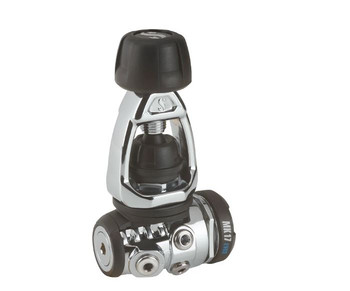
Scubapro MK17 EVO2 First Stage Regulator
Scubapro
$619.99The Scubapro MK17 Evo2 first stage is great for both cold and warm water diving. Pair with a variety of Scubapro second stage regulators.First Stage: Yoke (standard), DIN (optional) Balanced...5222$619.99