


Drysuits
Free Shipping across Canada! All orders over $150
Orders Processed and Shipping Fast!
We are Canadian! Orders shipped from our Edmonton warehouse
High Quality Gear - Divemaster & Instructor tested and approved
Buy drysuits in Canada for cold water scuba diving — neoprene, crushed neoprene, and trilaminate models from DUI, Scubapro, Scuba Force and other leading manufacturers. We carry a selection of drysuits suited to recreational, technical, and professional cold-water diving in Canadian lakes, rivers, and ocean environments.
-

DUI FLX Extreme Drysuit
DUI
It’s an entirely new combination of DUI’s most popular drysuit features. Made with a Trilaminate material with polyester outer layers (the same material as the top of the FLX50/50) makes it...1489 -
STAFF PICK


Scuba Force Xpedition Drysuit - Ladies
Scuba Force
$3,999.00The Xpedition drysuit by Scuba Force is a high quality drysuit that will keep you warm and dry in the coldest of environments. Easy on and off, durable and comfortable, and allows for maximum...4792$3,999.00 -


DUI CF200X Drysuit
DUI
Only DUI has crushed neoprene. DUI takes 3mm neoprene, builds a drysuit then puts it through a process that actually off-gases the material and crushes it to 1mm. This makes a dense, stretchy...1484 -

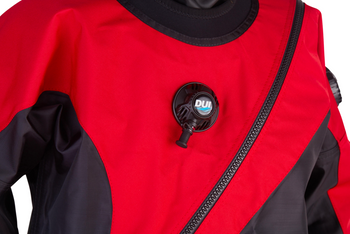
DUI TLS350 Drysuit
DUI
Whether you're a technical diver mapping a cave system, a research diver in Antarctica or a recreational diver on any given weekend the TLS350 can take you where no one has gone before. Made with...1493 -


DUI CLX450 Drysuit
DUI
The CLX450 is often referred to as the "Tuxedo of Drysuits". A well-deserved name with its handsome, Cordura blend polyester/butyl rubber/polyester material on the upper body that also offers extra...1485 -
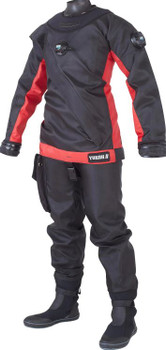

DUI Yukon II Drysuit
DUI
$2,876.00The Yukon II is front-entry drysuit available in men's and ladies sizes and styles, ensuring a great fit for every size of scuba diver. Superior flexibility and unrestricted range of motion for...3676$2,876.00 -
STAFF PICK


Scuba Force Xpedition Drysuit - Men's
Scuba Force
$3,799.00The Xpedition drysuit by Scuba Force is a high quality drysuit that will keep you warm and dry in the coldest of environments. Easy on and off, durable and comfortable, and allows for maximum...4791$3,799.00 -

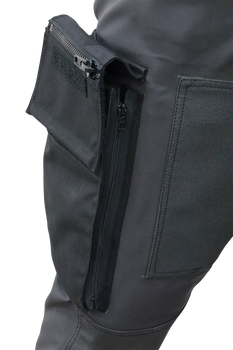
Scuba Force Xpedition SE Drysuit - Ladies
Scuba Force
$4,199.00The Xpedition SE drysuit by Scuba Force is a high quality drysuit that will keep you warm and dry in the coldest of environments. Easy on and off, durable and comfortable, and allows for maximum...4790$4,199.00 -


Scuba Force Xpedition SE Drysuit - Men's
Scuba Force
$3,999.00The Xpedition SE drysuit by Scuba Force is a high quality drysuit that will keep you warm and dry in the coldest of environments. Easy on and off, durable and comfortable, and allows for maximum...4789$3,999.00
What to look for in a drysuit
|
Neoprene vs. crushed neoprene vs. trilaminate Back-zip vs. front-zip entry |
Integrated boots vs. neoprene socks Dry glove compatibility |
Frequently asked questions
Do I need to be fitted for a drysuit or can I order standard sizing?
Unlike wetsuits, drysuits are significantly more difficult to return or exchange if the fit is wrong — and an ill-fitting drysuit is both uncomfortable and potentially unsafe. Standard sized drysuits are available and work well for divers whose measurements fall within typical proportions, but the fit must be checked with your full undergarment system in place. We strongly recommend coming in to our Edmonton store for an in-person fitting before purchasing. If you are ordering remotely, take chest, waist, hip, inseam, shoulder width, and height measurements and compare them carefully to the manufacturer's size chart. Contact us before ordering if you are between sizes or have an unusual body proportion — an improperly fitted drysuit is one of the most common regrets we see from divers who did not get fitted.
Can I repair a drysuit seal myself or does it need a professional?
Minor latex seal maintenance — like applying seal conditioner or trimming a small ragged edge — can be done at home. However, replacing a full wrist or neck seal requires bonding the new seal to the suit material, which involves specific adhesives, proper preparation of the bonding surface, and drying time under controlled conditions. An improperly bonded seal that fails underwater is a serious problem. We recommend having seals replaced by a qualified drysuit technician. If you are diving regularly, learning to do your own seal replacements under the guidance of a technician is a worthwhile skill — seal life varies considerably based on UV exposure, chemical contact, and frequency of use. Be mindful of the use of sunscreen or bug repellent around drysuits!
How do I care for my drysuit zipper?
The zipper is one of the most expensive components on a drysuit and one of the most neglected. After every dive, rinse the zipper with fresh water and allow it to dry before closing it for storage — storing a damp zipper closed promotes corrosion and mold growth in the teeth. Clean the zipper teeth periodically with a soft brush to remove salt, sand, and debris. Apply zipper wax or the manufacturer's recommended lubricant to the teeth before every dive season and after extended storage — the zipper should slide smoothly with moderate hand pressure. If the zipper feels stiff, apply more lubricant; do not force it. A properly maintained drysuit zipper should last many years; a neglected one can fail within a season.
What is the inflator valve on a drysuit for?
The inflator valve on the chest or left arm of the drysuit connects via a low-pressure hose to a port on your regulator first stage — the same type of connection used for your BCD. As you descend, increasing water pressure compresses the suit and the undergarments inside it, reducing insulation and creating an uncomfortable squeeze. You add small amounts of air through the inflator to maintain a comfortable volume inside the suit and control buoyancy. On ascent, you vent excess air through a dump valve — typically on the upper left arm — to prevent uncontrolled ascent. Managing suit volume simultaneously with BCD inflation is the primary new skill that drysuit diving requires over wetsuit diving, and is why dedicated drysuit training is essential.