



Buoyancy Compensator
Free Shipping across Canada! All orders over $150
Orders Processed and Shipping Fast!
We are Canadian! Orders shipped from our Edmonton warehouse
High Quality Gear - Divemaster & Instructor tested and approved
Buy scuba BCDs in Canada — jacket style, back-inflate, wing and backplate, and sidemount systems for recreational and technical diving, in sizes for men, women, and all body types. A BCD holds your tank on your back, provides positive buoyancy at the surface, and lets you achieve neutral buoyancy underwater by adding or removing air from the bladder. All BCDs we carry are hand-picked and used by our Divemasters and Instructors diving locally in Canada and around the world.
-


Multi-Purpose Hanger
Saekodive
$24.95Meet the Multi-Purpose Hanger—your all-in-one solution for drying and storing scuba wetsuits and BCDs without a single wire hanger in sight. Because let’s face it, wire hangers and wetsuits just...1029$24.95 -

Travel Hanger - BCD
XS Scuba
$31.99Jet-setting with your scuba gear? Don’t leave this behind! The Travel BCD Hanger is your ultimate on-the-go gear companion—lightweight, compact, and cleverly designed to fold up and fit right into...1027$31.99 -
Out of stockTOP SELLER

Scubapro Hydros Thigh Pocket
Scubapro
$85.99For use with the Scubapro Litehawk, Hydros Pro and Hydros X BCD as well as many other BCD models with a D-ring near the thigh. The thigh pocket with a large bellow design provides more storage...3506$85.99 -

Scubapro Hydros Pro BCD - Mini Dring Kit
Scubapro
$34.99For use with the Scubapro Hydros Pro BCD (Men's and Women's). The Mni D-Ring Plate provides extra attachment points for accessories, such as marker buoys, lights, and hose routing.3501$34.99 -

Scubapro Hydros Pro BCD - Knife Plate
Scubapro
$34.99For use with the Scubapro Hydros Pro BCD (Men's and Women's). Ideal for attaching a small BCD knife to the Hydros Pro BCD. Works with the following Scubapro knives: Scubapro Mako Stainless...3502$34.99 -

Book Screws / Sex Bolts
Aropec
$15.95Use to attach a variety of accessories, such as mesh pouch to plate, or to secure wing to stainless steel or aluminum backplate for scuba diving. Features: Sold as a single unt that includes one...1190$15.95 -


Single Weight Pouch
XS Scuba
$22.00Add extra weight to your scuba BCD. Features: Holds up to 5Ibs soft of hard weight Slides over tank cam straps or harness waist straps Allows optimum positioning for trim in water4063$22.00 -

Scubapro Hydros Pro BCD - Bungee Set Medium
Scubapro
$34.99For use with the Scubapro Hydros Pro BCD (Men's and Women's). The bungees allow you to add extra storage capacity for accessory items by attaching the bungees to mini d-rings, lumbar plate, or your...3503$34.99 -

Scubapro Hydros Pro BCD - Bungee Set Large
Scubapro
$34.99For use with the Scubapro Hydros Pro BCD (Men's and Women's). The bungees allow you to add extra storage capacity for accessory items by attaching the bungees to mini d-rings, lumbar plate, or your...3504$34.99 -


Dive Alert Plus
Ideations
$159.95Small and lightweight signalling device that attaches to your scuba BCD power inflator hose. Features: Emits loud signal both in air (on the surface) and in water (underwater) Above water, the...3759$159.95 -

Tank Band Stainless Steel Lock
Aropec
$54.99Stainless steel tank cam band. Replacement for your scuba BCD or for use with a aluminum or steel back plate.1213$54.99 -

Revivex BCD Cleaner
Gear Aid
$15.95Cleaning the inside and outside of your BCD is important to keep it maintained and functioning perfectly. The Revivex BCD Cleaner will help remove salt and chlorine as well as keep your gear smelling...4089$15.95 -


Glue On Thigh Pocket
XS Scuba
$79.99Need an extra pocket for your accessories? Most BCD pockets are located too high up on the torso to be easily accessible and are often very small. A thigh pocket is a better option... easier to...1096$79.99 -


Scubapro Hydros Pro BCD - Ninja Pocket
Scubapro
$74.99For use with the Scubapro Hydros Pro BCD (Men's and Women's). The ninja pocket provides more storage capacity for diving accessories, such as dive slates, lights, marker buoys, spare mask, etc. Rolls...3505$74.99 -
On SaleSALE 15% OFF!


Scubapro Hydros Pro BCD - Men's
Scubapro
$1,459.49$1,719.99Comfortable and lightweight, this BCD works great for travel to warmer water or for at home cold water diving in Canada. Very customizable with multi-attachment points for accessories and pockets,...3226$1,459.49$1,719.99 -
On Sale


Scubapro Hydros Pro BCD Color Kit
Scubapro
$49.49$95.99Add a splash of color to the Scubapro Hydros Pro BCD with the optional color kits. Make your scuba gear show off your personal style and match to many other Scubapro gear and accessories. Not all...3228$49.49$95.99 -


Billy Ring / Weight Keeper with D-Ring Stainless Steel
XS Scuba
$16.99Stainless steel weight keeper with attached d-ring. Features: Attached d-ring is a convenient attachment point for clips and accessories Weight keeper can be used on a weight belt or on BCD...4657$16.99 -


Belt Buckle - stainless steel
Aropec
$19.95Stainless steel deluxe belt buckle is preferred over the delrin buckle when using more than 10Ibs of weight on a belt. This durable buckle is constructed of thicker stainless steel than other models...1992$19.95 -


Anti-Slip Rubber for Tank Band
Aropec
$10.00Anti-slip rubber slides onto the webbing of your BCD tank band to ensure a snug and secure fit with your scuba tank. Fits standard 2" tank band webbing. Webbing not included.1186$10.00 -


Backplate - Stainless Steel
Aropec
$179.99Stainless steel diving backplate provides superb stability when paired with a wing and harness. The extra weight of a stainless steel plate versus an aluminum weight helps distribute your required...1189$179.99 -


Multi-Repair Flat Tool
TDO
$45.95Made with high quality stainless steel, this handy repair tool fits in your save-a-dive kit or tool box easily. Perfect for quick repairs at the dive site or on the boat. Features: Spanner wrench...4634$45.95 -


Universal Power Inflator
Saekodive
$59.95Replacement standard power inflator for scuba diving BCD (buoyancy compensator device). Fits most BCD's on the market. Comfortable fit for small or large hands.1205$59.95 -


Deluxe Backplate Harness System
TDO
$200.00Comfortable, padded harness system for use with wing and backplate. Features: Thick padding on the shoulders, stainless steel drings for accessories, and quick-release buckles on the...1196$200.00 -
Out of stock

Highland Standard Harness Kit
XS Scuba
$105.00Standard harness kit for use with a backplate and wing for recreational and technical diving. Continuous weave design can be customized for each diver. Includes: 12 feet of webbing with s/s...1210$105.00 -
On Sale


Back Plate - Anodized Aluminum
Aropec
$129.19 - $140.00Black anodized aluminum backplate for scuba diving is lighter than stainless steel making it perfect for travel or warm-water diving when a lot of extra weight is not required. Size: 40cm long x 26...4049$129.19 - $140.00 -

Power Inflator Nipple to 1/4 NPT
Innovative Scuba
$10.00Replacement power inflator nipple for your scuba BCD. Features: 1/4 NPT male threads2135$10.00 -


OMS Performance Mono Wing 32lb
OMS
$599.99The OMS Performance Mono Wing fits with an aluminum or stainless steel backplate along with a harness. Features: Donut-style wing that allows air to move easily from side to side to ensure even...4070$599.99 -
On SaleSTAFF FAVORITE


OMS Back-Inflate BCD - Single Tank
OMS
$1,099.00$1,221.97One of the benefits of diving a wing & backplate versus a traditional BCD is the flexibility and options that are available. These setups are modular in that various parts can be substituted to suit...X4316$1,099.00$1,221.97 -

Scubapro MK25 EVO / S600 Regulator Set
Scubapro
$1,589.99This regulator set is built to withstand cold diving conditions. The first stage features a fifth low pressure port with swivel, allowing for a variety of gear configurations. The second stage is...3018$1,589.99 -

Inflator Tool
Highland
$21.99Tool for servicing most standard power inflators. Stainless steel. This item qualifies for FREE SHIPPING*! (*Shipped letter mail with Canada Post. Regular shipping policies apply when combined with...1203$21.99 -
Out of stock

Scuba Force Tank Camband II
Scuba Force
$79.99The cam band type II style tank bands can be adjusted in length to fit 7" to 8" diameter tanks and can be attached or removed from a tank without need to slide over the whole tank. The stainless...4815$79.99 -
On SaleTOP SELLER


Sherwood Avid BCD
Sherwood
$889.89$999.99Proven to be our most popular jacket-style BCD with a newly redesigned fit and styling. More comfortable with neoprene padded neck roll to prevent chafing and irritation. Weight integration system...2632$889.89$999.99 -


Scubapro Hydros Pro 2 - Monorail Multi-Mount Accessory Plate (Set)
Scubapro
$19.99Personalize your Scubapro Hydros Pro 2 BCD with the Monorail Multi-Mount Accessory Plate Set. Adding this mount to your Hydros 2 enables you to add accessories above or below the Monorail and weight...5377$19.99 -

Scubapro MK25 EVO / A700 Regulator Set
Scubapro
$1,879.99This regulator set is built to withstand cold diving conditions. It features a fifth low pressure port and swivel to assist with hose routing for technical and sidemount configurations. First...2792$1,879.99 -

Scubapro Super Cinch Tank Band & Buckle
Scubapro
$134.99Tank band to secure your scuba tank to your BCD. Stainless steel tank cam lock. Secures the tank for maximum stability at depth. Replacement for your scuba BCD or for use with an aluminum or steel...4770$134.99 -

Single Tank Adapter Stainless Steel
XS Scuba
$124.99Stainless steel light weight single scuba tank adapter with bolt kit fits any diving backplate with standard 11 inch holes. Requires two cam straps to hold scuba tanks (not included). Approximately...1893$124.99 -
On SaleSALE 15% OFF!


Scubapro Hydros Pro BCD - Ladies
Scubapro
$1,459.49$1,719.99Comfortable and lightweight, this BCD works great for travel to warmer water or for at home cold water diving in Canada. Very customizable with multi-attachment points for accessories and pockets,...3227$1,459.49$1,719.99 -

Scuba Force Sidemount Sliding D-Ring
Scuba Force
$17.95Stainless steel 50mm D-ring with 4 stays for the 2 inch webbing. Can be used to easily adjust the position of the slide on the webbing. Can be used on it's own or with added standard or low profile...4822$17.95 -

Scubapro MK25 EVO / S600 Regulator Package
Scubapro
$2,308.97This regulator package includes: MK25 EVO / S600 Regulator Set R105 Backup RegulatorX5228$2,308.97 -
Out of stock


Cressi Replacement Power Inflator
Cressi
$59.99Replacement power inflator for Cressi scuba BCDs.5253$59.99 -


Scuba Force Black Devil Wing 32
Scuba Force
$649.99Single tank wing for use with most standard backplate and harness setups. Features: Made with 1000 cordura outer shell and nylon inner bladder Donut style prevents air getting trapped in any...4801$649.99 -

Scuba Force Black Devil Long & Heavy Back Plate
Scuba Force
$499.99Get ideal weight distribution with this extra long and extra heavy backplate. Inspired by European trekking-style backpacks, the Black Devil plate has been designed to sit more comfortably around the...4808$499.99 -

Scubapro AIR 2 Alternate Inflation Regulator
Scubapro
$479.99Add the Air2 upgrade to any Scubapro BCD. The Scubapro Air2 5th generation combines your inflator and backup octo into 1 unit, eliminating the need for a secondary second stage regulator (octo)...3638$479.99 -


Scubapro Hydros Pro & Regulator Package - Men's
Scubapro
$3,458.96The men's Hydros Pro BC has become our best selling BCD. It's compact, lightweight, fast-drying design makes it popular for dive travel. Great for cold or warm water diving. Choose Your Regulator:X3226$3,458.96 -


Scubapro MK11 EVO / C370 Regulator Set
Scubapro
$1,019.99This regulator set is a good lightweight, mid-range system that offers smooth breathing in all conditions. Best suited for warm water scuba diving. Chrome-plated brass body is specially designed to...5120$1,019.99 -


Scubapro MK19 EVO / G260 Regulator Set
Scubapro
$1,519.99This regulator set is ideal for every condition from recreational to tech, cold to warm temperatures, clear water to muddy, silty or rusty water. The first stage is completely sealed ensuring no...4631$1,519.99 -


Scubapro S-Tek Thigh Pocket
Scubapro
$99.99For use with the most BCD models with a D-ring on the waist. Clips to a dring and also has an adjustable strap to secure around your upper thigh. The thigh pocket with a large bellow design provides...5176$99.99 -

Scuba Force Star Nut Thumbwhell (Pair)
Scuba Force
$29.95The ScubaForce star nut is stainless steel covered with a black plastic cover for easy grip. Perfect for securing a backplate instead of aa metal star nut or book screw. Sold as a pair.4866$29.95 -


Scubapro Hydros Pro 2 - Weight Pocket (Set)
Scubapro
$289.99The Monorail weight pockets seamlessly integrate to the Hydros Pro 2 BCD. Features: Grey d-handle makes it easy to lock in place and to release in a hurry Pockets are self draining Hold 10lbs of...5378$289.99 -
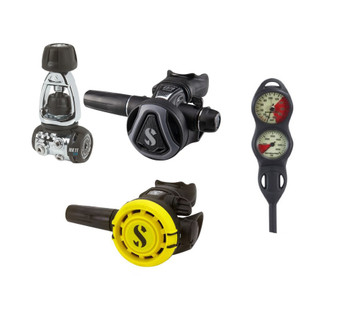
Scubapro MK11 EVO / C370 Regulator Package
Scubapro
$1,738.97This regulator package includes: MK11 / C370 Regulator Set R105 Backup RegulatorX5120$1,738.97 -

Scubapro MK25 EVO / G260 Regulator Set
Scubapro
$1,519.99This regulator set is built to withstand cold diving conditions. The first stage features a fifth low pressure port with swivel and the second stage features left or right hand hose configuration,...3636$1,519.99 -

Scuba Force WP500 Horizontal Weight Pocket System (pair)
Scuba Force
$199.00Add integrated weight pockets to any 2 inch webbing harness. Features: Sold as a pair of pockets Includes outer pocket to attach to webbing and inner weight pocket to hold the weight Each pocket...4810$199.00 -
LIGHTWEIGHT


Scubapro Navigator Lite BCD
Scubapro
$999.99The Navigator Lite BCD is the Scubapro's most compact and lightweight scuba BCD. Designed for the traveling scuba diver with great durability and easy use. Easy to adjust the 2 sizes to fit a wide...5255$999.99 -
Out of stock

Oxycheq Elbow Assembly
Oxycheq
$29.95Replacement Elbow joint, ring and gasket for Oxycheq wing.1201$29.95 -

Oxycheq Elbow OPV Dump Base
Oxycheq
$25.95Replacement base assembly for Oxycheq wings. Fits both the Elbow and OPV.1202$25.95 -


Oxycheq Wing - Single Bladder - Mach V Signature Series 40#
Oxycheq
$650.00The Mach V Signature Series Wing 40# for single tank diving is an extremely low profile wing producing less drag in the water. Integrated role control devices eliminate the need for a single tank...4048$650.00 -

Scuba Force Black Devil CTX Harness
Scuba Force
$369.00Ready to install onto any backplate and wing setup. Features: The ergonomically shaped padded shoulder straps with 4 d-rings and an easy to adjust length The cobra quick release buckle is designed...4826$369.00 -

Scuba Force Black Devil Long Back Plate
Scuba Force
$389.99Inspired by European trekking-style backpacks, the Black Devil plate has been designed to sit more comfortably around the shoulders and to avoid hitting pressure points on the kidneys. Made with...4807$389.99 -


Scubapro Hydros Pro 2 BCD - Deluxe Package
Scubapro
$1,769.97Scubapro Hydros 2 Deluxe Package - includes weight pockets and accessory plate The Scubapro Hydros Pro 2 BCD delivers comfort underwater, easy use, and lots of added features. Includes the all new...X5376$1,769.97 -
STAFF PICK

Scubapro MK17 EVO2 / G260 Regulator Package
Scubapro
$2,038.97This regulator package includes: MK17 EVO2 / G260 Regulator Set R105 Backup RegulatorX5223$2,038.97 -
On SaleONE SIZE FITS ALL


Cressi Aquawing Max BCD
Cressi
$1,199.99$1,299.99The Cressi Aquawing MAX BCD is a great light weight and compact option for wing and harness system. Great for travel and cold-water diving system. The Aquawing Max includes the modular adjustment...5122$1,199.99$1,299.99 -
On SaleTOP SELLER

Essentials Pack - BCD
Saekodive
$59.89$64.84All the essential gear for anyone that is purchasing or already owns their own scuba BCD. Features: Multi-purpose Hanger - Hooked hanger ends ensure your BCD stays on the hanger. Flip them over to...BUND1004$59.89$64.84 -
Out of stock


Highland Hurricane Pocket
Highland
$89.99Add an accessory pocket to your harness or wing and backplate. Easily fits a spare mask or dive reel with marker buoy. Features: Velcro attachment fits 2 inch webbing or use the 2 stainless steel...5092$89.99 -


Scubapro Hydros Pro 2 - Mini Weight Pocket (Set)
Scubapro
$289.99The Monorail mini weight pockets seamlessly integrate to the Hydros Pro 2 BCD. Features: Grey d-handle makes it easy to lock in place and to release in a hurry Pockets are self draining Hold 5lbs of...5379$289.99 -
On Sale

Scubapro MK2 EVO / R195 Set
Scubapro
$599.49$719.99The MK2 regulator paired with the R195 second stage is perfect to use with a pony bottle for a backup air source. MK2 First Stage Features: Classic downstream piston design features a...3943$599.49$719.99 -

Scubapro MK25 EVO / A700 Regulator Package
Scubapro
$2,598.97This regulator package includes: MK25 EVO / A700 Regulator Set R105 Backup RegulatorX2792$2,598.97 -


BCD Pull Dump Knob
Aropec
$6.00Plastic knob for scuba BCD pull dump. Hole in centre allows for string to be fed through and securely tied.5194$6.00 -
On Sale


Cressi Elettra Ladies BCD
Cressi
$799.99$899.95The Elettra jacket style BCD is designed to specifically for a woman's body shape. Fitted for a shorter torso, smaller shoulders but also shaped for curves. Use: Travel and warm-water...4927$799.99$899.95 -


Highland Bottom-Drop Weight Pocket (pair)
Highland
$189.99Add quick release weight pockets to your harness style scuba BCD's. Features: Fits most wing and backplate or any 2 inch webbing Each pocket holds up to 15lb/7kg of weight Grey plastic handle...5090$189.99 -


Highland Tempest Pocket
Highland
$89.99Add a storage pocket to your harness or wing and backplate. Fits spare mask or a SMB and dive reel/spool. Features: Velcro attachment fits 2 inch webbing or use the 2 stainless steel d-rings to...5093$89.99 -


Highland Zephyr Pocket
Highland
$59.99Add a storage pocket to your harness or wing and backplate. Fits a small SMB and reel. Features: Velcro attachment fits 2 inch webbing or use the 2 stainless steel d-rings to attached to a...5094$59.99 -
Out of stock


OMS OPR Valve for Monowing
OMS
$29.99Replacement overpressure relief valve for OMS wing. Fits all OMS models manufactured after 2015.5161$29.99 -

Oxycheq Wing - Single Bladder - Vertex Signature Series 55#
Oxycheq
$649.99The Vertex Signature Series 55# Wing for double tank diving is made with the same durable materials as the Mach V Series wings. Very streamlined design means less drag and no taco-effect on the wing...2180$649.99 -

Scuba Force Black Devil Tech Harness
Scuba Force
$199.99Classic tech harness for any backplate. Features: Includes 2 inch continuous webbing harness with center grommet and 2 inch crotch strap with 2 d-rings Includes Stainless steel buckle, 2 bent...4803$199.99 -

Scuba Force Sidemount Blade Soft Pad
Scuba Force
$139.99The Blade soft pad can be mounted directly to the blade comfort harness and black tech harness. Features: Six weight pockets can hold up to 12 kg or 26 lb of total weight (sold seperate) Weight...4818$139.99 -
STAFF PICK

Scubapro MK17 EVO2 / G260 Regulator Set
Scubapro
$1,319.99This regulator set is great for both cold and warm water diving. With the ability to switch the second stage between right or left hand configuration, it is a popular system for tech divers and cave...5223$1,319.99 -

Scubapro MK19 EVO / A700 Regulator Set
Scubapro
$1,879.99This regulator set is ideal for every condition from recreational to tech, cold to warm temperatures, clear water to muddy, silty or rusty water. The first stage is completely sealed ensuring no...4760$1,879.99 -
TOP SELLER

Scubapro MK19 EVO / G260 Regulator Package
Scubapro
$2,238.97This regulator package includes: MK19 / G260 Regulator Set R105 Backup RegulatorX4631$2,238.97 -

Scubapro MK25 EVO / G260 Regulator Package
Scubapro
$2,238.97This regulator package includes: MK25 EVO / G260 Regulator Set R105 Backup RegulatorX3636$2,238.97 -


Oxycheq Package - Wing & Backplate - Doubles
Oxycheq
$1,224.00One of the benefits of diving a wing & backplate versus a traditional BCD is the flexibility and options that are available. These setups are modular in that various parts can be substituted to suit...X0029$1,224.00 -
On Sale


Oxycheq Package - Wing & Backplate - Single
Oxycheq
$1,199.00$1,271.98One of the benefits of diving a wing & backplate versus a traditional BCD is the flexibility and options that are available. These setups are modular in that various parts can be substituted to suit...X0030$1,199.00$1,271.98 -

Scuba Force Black Devil Back Plate
Scuba Force
$299.00Inspired by European trekking-style backpacks, the Black Devil plate has been designed to sit more comfortably around the shoulders and to avoid hitting pressure points on the kidneys...4806$299.00 -

Scuba Force Black Devil CTX BCD
Scuba Force
$1,099.99Classic wing and backplate system with a unique shaped Stainless Steel backplate for the most comfortable fit. Enhanced ergonomically shaped shoulder straps offer greater comfort and stability...4813$1,099.99 -


Scuba Force Black Devil CTX BCD & Regulators Package
Scuba Force
$2,549.98Classic wing and backplate system with a unique shaped Stainless Steel backplate for the most comfortable fit. Enhanced ergonomically shaped shoulder straps offer greater comfort and stability...X4813$2,549.98 -

Scuba Force Blade Sidemount Back Plate
Scuba Force
$399.00The unique shape of the Blade Sidemount backplate offers great comfort and stability while diving. Features: Made with powder coated stainless steel Length: 56 cm Thickness: 3 mm Weight: 3,3...4809$399.00 -

Scuba Force Sidemount Blade Butt Pad
Scuba Force
$159.99Add additional length and attachment points to your sidemount set-up. The butt pad can be mounted directly to the bottom of the Blade sidemount wing with 2 bookscrews (not included)4817$159.99 -


Scuba Force Sidemount Comfort Harness
Scuba Force
$399.99The Sidemount harness with all the comfort, adjustability and function. Features: Adjustable shoulder straps with heavy duty quick release Additional padding on shoulders for comfort and to...4819$399.99 -

Scuba Force Sidemount Pure Harness
Scuba Force
$299.99The Blade Pure Sidemount Harness takes a minimalist approach to to diving. Simple is reliable and functional. Features: Configured with an upper and lower essentials plate to evenly distribute...4821$299.99 -

Scuba Force Sidemount Tank Holder
Scuba Force
$21.95The sidemount "tank holder" attachment can be positioned at the back of the abdominal belt on left and right side of the spine to hook in sidemount tanks or other accessories (SMB, reels, buoys, etc)...4823$21.95 -

Scuba Force Sidemount Tech Harness
Scuba Force
$299.99The Blade Tech Sidemount harness is robust, rugged and comfortable. Simple design that is reliable and functional. Features: The webbing harness is mounted directly to the back weight pad 6...4820$299.99 -


Scuba Force Sidemount Wing
Scuba Force
$599.00Wing air bladder for sidemount harness. Features: Made with ballistic Cordura on the outer shell and rugged nylon inner bladder Inflator can be mounted on left or right side of the...4816$599.00 -

Scuba Force WP500 Vertical Weight Pocket System (pair)
Scuba Force
$199.00Verticus system is designed for slim waisted divers to add integrated weight pockets to any 2 inch webbing harness but do not have the space for a long pocket. Features: Sold as a pair of...4811$199.00 -


Scubapro Hydros Pro & Regulator Package - Ladies
Scubapro
$3,458.96The ladies Hydros Pro BCD has become our best selling BCD. It's compact, lightweight, fast-drying design makes it popular for dive travel. Great for cold or warm water diving. Choose Your Regulator:X3227$3,458.96 -


Scubapro Hydros Pro 2 BCD
Scubapro
$1,459.99Brand new for 2026! The Scubapro Hydros Pro 2 BCD delivers comfort underwater, easy use, and lots of added features. Includes the all new Monorail weight system that allows the diver to personalize...5376$1,459.99 -
TOP SELLER

Scubapro MK19 EVO DIN / G260 Regulator Set
Scubapro
$1,519.99This DIN scuba regulator set is ideal for every condition from recreational to tech, cold to warm temperatures, clear water to muddy, silty or rusty water. The first stage is completely sealed...5345$1,519.99 -


Scubapro Navigator & Regulator Package
Scubapro
$2,738.96The Scubapro Navigator is a great travel BCD, weighing in at under 6lbs without compromising the high quality you expect from Scubapro. The Navigator is a back-inflate style buoyancy compensator...X5255$2,738.96 -
Out of stock

Scubapro Replacement Inner Weight Pocket (each)
Scubapro
$89.99Replacement inner weight pocket for the Scubapro Hydros Pro original, Bella, Seahawk2, Equator, Level, Equalizer and Go BCD's. Comes as a single pocket.5393$89.99 -

Sidemount Package - Scubapro MK19 EVO / G260
Scubapro
$3,660.74The Scubapro MK19 EVO DIN / G260 regulator set is popular with tech divers and cave explorers. Engineered specifically for cold-water conditions. Reversible hose attachments on the second stage...X0033$3,660.74 -
TOP SELLER
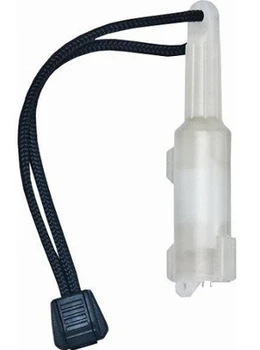

Water Activated Tank Marker Strobe Light
Innovative Scuba
$23.99Water activated marker lights turn on when they come in contact with water and turn off when they are dried off. Features: Total life is 500 hours which far exceeds most marker lights on the...4052$23.99 -

Scubapro MK19 EVO / A700 Regulator Package
Scubapro
$2,598.97This regulator package includes: MK19 EVO / A700 Regulator Set R105 Backup RegulatorX4760$2,598.97
What to look for in a scuba BCD
|
BCD style — the most important decision Integrated weight pockets |
Fit — men's, women's, and sizing D-rings, pockets, and attachment points |
Frequently asked questions
What does a BCD do and do I need one for scuba diving?
Yes — a BCD is essential for scuba diving. BCD (also called a BC) is short for buoyancy control device or buoyancy compensator. It performs two functions: it holds your tank securely on your back, and it controls your buoyancy by allowing you to add or release air from an internal bladder. At the surface, you inflate it to stay afloat easily. Underwater, you add small amounts of air to achieve neutral buoyancy — the state of neither sinking nor floating — which is the foundation of good dive technique. Without a BCD, managing your depth and staying off the bottom or reef would be extremely difficult.
What is the difference between a jacket BCD and a back-inflate BCD?
In a jacket BCD, the air bladder wraps around your sides and back — when inflated, air distributes around your torso, keeping you upright at the surface with your head naturally out of the water. In a back-inflate BCD, all the air is behind you — this can tip less experienced divers face-down at the surface, but underwater it encourages a flatter, more horizontal trim position which is preferred by many experienced divers. Jacket style is the most forgiving choice for new divers. Back-inflate suits divers who have developed their buoyancy skills and want better trim underwater.
What is a wing and backplate BCD and who is it for?
A wing and backplate system replaces the traditional soft-body BCD with a modular setup: a rigid backplate (stainless steel or aluminum), a separate inflatable wing, and a harness. The system is highly configurable — you can swap wings for different tank setups (single, double, or sidemount), change backplates, and add or remove integrated weight pockets. Wing and backplate is used by both recreational and technical divers. It is particularly popular with divers who want a long-term, upgradeable system rather than a fixed design. The learning curve is slightly higher than a jacket BCD, but many divers find it more comfortable and versatile over time. Our entire rental fleet is wing and backplate so if you're in the Edmonton area and want to try one out, stop by and rent one for the pool or open water.
How do I care for my BCD after diving?
After every dive, rinse the outside of your BCD thoroughly with fresh water, paying particular attention to the power inflator buttons where sand and salt can accumulate and cause sticking. Rinse the inside of the bladder by adding fresh water through the power inflator hose or an overpressure valve, sloshing it around, and draining it completely. Add a small amount of BCD cleaner to the inside periodically to prevent mold and odor. Store your BCD slightly inflated — never compressed flat — and hang it properly on a BCD hanger rather than folding it over a hook. Have it inspected by a qualified technician every one to two years or every 100 dives.