


Tanks
Free Shipping across Canada! All orders over $150
Orders Processed and Shipping Fast!
We are Canadian! Orders shipped from our Edmonton warehouse
High Quality Gear - Divemaster & Instructor tested and approved
Buy scuba diving cylinders in Canada — aluminum and steel tanks in a range of capacities for recreational diving, technical diving, sidemount configurations, and pony bottle setups. All cylinders ship with current documentation and meet Transport Canada requirements. Aluminum tanks are the most widely available and rent-compatible option; steel tanks provide buoyancy advantages that benefit drysuit divers and frequent local divers in Canada. New tanks ship with a current hydrostatic test; annual VIP inspections are required and can be arranged through most local dive shops.
-
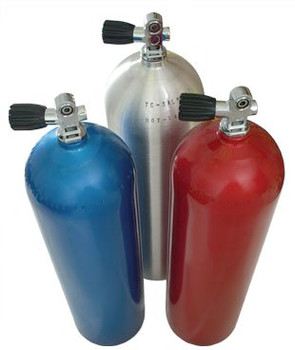

Tank Aluminum LP 80cf
Catalina
$529.99Aluminum scuba tank for scuba diving. Features: Comes standard with International Valve (Yoke & DIN compatible) Initial visual inspection is completed and is good for 1 year Tanks will be shipped without air Comes standard in silver (brushed...1864$529.99 -
Out of stock

Tank Steel HP 100cf
Faber
$849.99Steel scuba tank for scuba diving. Features: Comes standard with International Valve (Yoke & DIN compatible) and octagon boot Initial visual inspection is completed and is good for 1 year Comes standard painted grey (galvanized available for...2684$849.99 -
Out of stock

Tank Steel LP 85cf
Faber
$749.99Steel scuba tank for scuba diving. Features: Comes standard with International Valve (Yoke & DIN compatible) and octagon boot Initial visual inspection is completed and is good for 1 year Comes standard painted grey (galvanized available for...1868$749.99 -

Tank Aluminum LP 40cf
Catalina
$449.99Aluminum scuba tank for scuba diving. Comes standard with International Valve (Yoke & DIN compatible) Initial visual inspection is completed and is good for 1 year Comes standard brushed no-coat (silver) color, call for availability of other...1860$449.99
What to look for when buying a scuba cylinder
|
Aluminum 80 — the standard recreational tank Steel tanks — the Canadian diver's advantage |
High pressure vs. low pressure steel tanks Pony bottles — backup gas for added safety |
Frequently asked questions
Should I buy a steel or aluminum tank for diving in Canada?
For most Canadian divers who dive locally — particularly drysuit divers in cold lakes and ocean environments — a steel tank is generally the better long-term choice. The negative buoyancy throughout the dive reduces lead weight requirements, which is a meaningful comfort improvement on every dive. Steel tanks are also typically more compact for equivalent volume, which improves trim. The additional cost and the need for careful internal maintenance are the trade-offs. For divers who travel frequently to tropical destinations and rent tanks there, an aluminum 80 is more universally compatible with rental equipment and fill stations worldwide. Call us at (888) 483-0049 to discuss which configuration suits your specific diving profile.
What is the difference between an LP and HP steel tank?
LP (low pressure) steel tanks operate at 2400 to 2640 PSI working pressure. HP (high pressure) steel tanks operate at 3300 to 3442 PSI. For the same physical cylinder size, a higher working pressure holds more gas — so HP tanks can be made more compact for equivalent capacity. The practical downside of HP tanks is the difficulty of obtaining a complete fill: the air heats significantly during compression to these pressures, and as it cools after filling, the pressure drops — leaving you with less than the rated capacity unless the tank is topped off after cooling. Many dive shops in smaller Canadian communities may not have equipment to fill HP tanks to full working pressure. LP steel tanks are easier to fill completely and are the more practical choice for most Canadian divers.
Can I use my own tank at dive shops and resorts in Canada and abroad?
In Canada, any cylinder with a current VIP sticker and in-date hydrostatic test can be filled at any dive shop. Most shops will inspect the sticker before filling — bring your tank early in the season to confirm everything is current before your first dive. For tropical travel, bringing your own tank is generally impractical — airline policies on cylinder transport are restrictive, and fill stations at popular dive destinations stock aluminum 80s in abundance. The exception is technical divers travelling to remote locations with specific cylinder requirements who may have no other option. For recreational travel, rent at your destination.
How do I store my scuba tank safely between dive seasons?
Store tanks with a small amount of pressure inside — never completely empty. An empty tank with an open valve allows humid air to enter freely, promoting internal corrosion in steel tanks. A few hundred PSI of residual pressure is sufficient to maintain a slight positive internal pressure that prevents moisture ingress. Store tanks upright or in a secure horizontal rack away from direct sunlight, heat sources, and areas subject to impact. Keep the valve handwheel closed during storage to protect the valve seat. Rinse the valve and exterior with fresh water after salt water diving. Have the valve o-ring inspected annually and replace it at any sign of wear — a leaking valve wastes gas and can prevent a full fill.