


Sunscreen
Free Shipping across Canada! All orders over $150
Orders Processed and Shipping Fast!
We are Canadian! Orders shipped from our Edmonton warehouse
High Quality Gear - Divemaster & Instructor tested and approved
There are no products listed under this category.
What to know about reef-safe sunscreen
|
Mineral vs. chemical sunscreen — the key difference How to read a sunscreen label |
Application — timing and reapplication Banned destinations — know before you go |
Frequently asked questions
Does reef-safe mineral sunscreen work as well as regular sunscreen?
Yes — a mineral sunscreen with a high zinc oxide concentration (20% or above) provides broad-spectrum UVA and UVB protection comparable to high-SPF chemical sunscreens. Zinc oxide in particular provides some of the broadest UV coverage of any active ingredient. The main practical difference is that mineral sunscreens can leave a white cast on the skin, particularly on darker skin tones — newer formulations have significantly reduced this effect. They also tend to feel slightly thicker on application. The trade-off in skin feel is minimal compared to the benefit to the reef and marine life.
How much sunscreen should I apply?
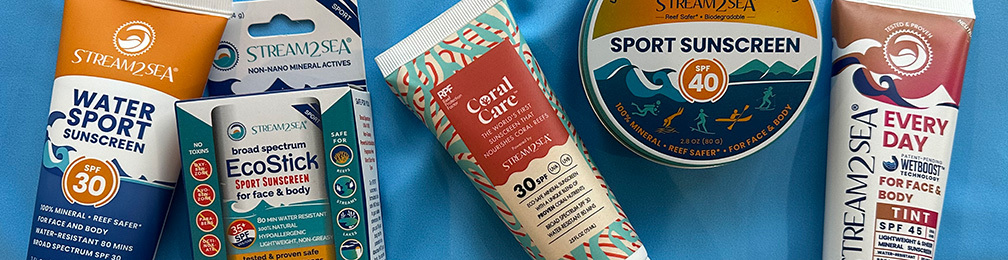
Most people apply 25% to 50% of the amount needed to achieve the rated SPF. The standard guideline is one ounce (about a shot glass worth) for full body coverage, or approximately a nickel-sized amount for the face alone. You'll find the Stream2Sea products that we sell will go a long way as you require a lot less product than other brands of sunscreen. Applying too little means your actual protection is significantly lower than the SPF number on the label. Apply to all exposed skin 15 to 30 minutes before sun exposure. For snorkeling, pay particular attention to the back of the neck, tops of the feet, backs of the hands, and the lower back — the areas facing upward while you float at the surface.
Is it better to use sunscreen or a UV shirt for snorkeling?
For areas it can cover, a UPF 50+ UV shirt is more reliable than sunscreen in the water — it provides consistent protection without washing off or requiring reapplication. The most practical approach is to combine both: a long-sleeve UV shirt for the torso, arms, and hands, and mineral reef-safe sunscreen for the face, neck, and any other exposed skin. This minimizes the amount of sunscreen needed, reducing both cost and your impact on the reef. See our UV shirts and rashguards for options.
Why is oxybenzone harmful to coral reefs?
Oxybenzone is a chemical UV filter found in the majority of conventional sunscreens. Research has shown that it causes coral bleaching by damaging the symbiotic algae that give coral its colour and provide its nutrition. It also disrupts the reproductive cycles of sea urchins, fish, and other marine organisms, and has been detected at harmful concentrations in the water at popular snorkeling sites around the world. Popular dive destinations have enacted bans specifically because of the volume of sunscreen entering the water at high-traffic reef sites. Switching to a mineral sunscreen is a straightforward way to eliminate your personal contribution to this problem.