


Tank Valves
Free Shipping across Canada! All orders over $150
Orders Processed and Shipping Fast!
We are Canadian! Orders shipped from our Edmonton warehouse
High Quality Gear - Divemaster & Instructor tested and approved
Buy scuba tank valves in Canada — yoke (K-valve), DIN, and international (Pro-Valve) configurations for aluminum and steel cylinders. A tank valve controls gas flow from the cylinder to the regulator and includes an integrated burst disc safety relief mechanism. Yoke valves are the North American standard and are compatible with the vast majority of rental regulators worldwide. DIN valves are common in Europe and with technical diving equipment. International valves offer compatibility with both yoke and DIN regulators using a removable insert.
-
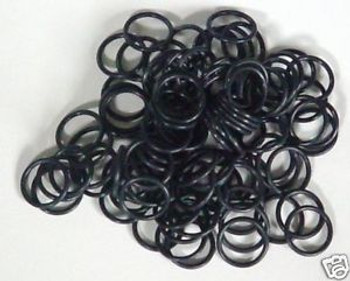
Tank Yoke Valve Oring - 5 Orings
TDO
$5.00Keep your tank sealed tight with these standard rubber O-rings for any yoke-style scuba valve. Comes with 5 spares—because one is never enough. Quick to swap and built to last, they help keep your air right where it belongs. This item...1042$5.00 -

Deluxe O-Ring Kit
Saekodive
$39.95Keep your scuba gear and tanks in top shape with this handy plastic storage box packed with 225 assorted O-rings in all the sizes you need. Plus, it includes O-ring picks to make swaps quick and painless. Everything organized, everything...1043$39.95 -

Mini O-Ring Kit - 12 pack
TDO
$11.95Small oring kit contains 12 orings: 6 x #014 tank valve oring 3 x #010 LP hose oring 3 x #011 HP hose oring3845$11.95 -


International Pro Valve
XS Scuba
$149.99Replacement valve for your scuba tank, use with both k-valve and DIN regulators. Spin-out piece on the valve is removable with Allen key to transform your valve from k-valve to DIN in seconds.1883$149.99 -
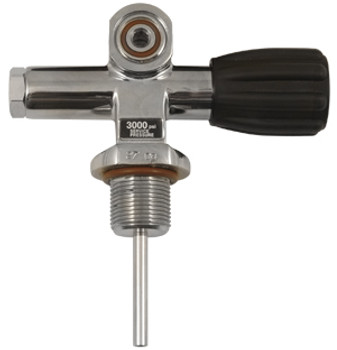

Modular Valve Left/Right
XS Scuba
$219.99Replacement valve for your scuba tank comes ready for assembly for your twin tanks for backmount double tank diving, or to use with sidemount diving. Available in DIN or International Pro Valve and left or right hand. Please contact us for availability...1886$219.99 -

 $29.99
 -
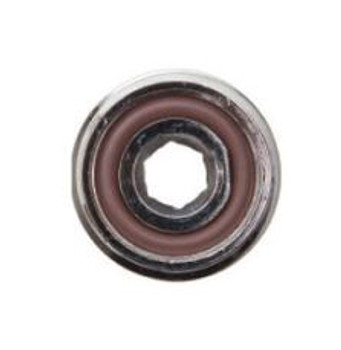
DIN Insert Spin-Out for Pro Valve
XS Scuba
$29.99Replacement insert for internation pro-valve to convert from DIN to yoke. Fits 230 Bar valves by XS scuba and Thermo Pro.3511$29.99 -
Out of stock

Tank Valve - K-Valve/Yoke
XS Scuba
$149.00Replacement tank k-valve. Features: Fits most aluminum 3000 PSI tanks Fits standard yoke or k-valve 3/4”-14 NPSM standard inlet threads Air service only1901$149.00 -

Crossbar with Isolator
XS Scuba
$174.99Add this to right and left modular valves when twinning scuba cylinders.1878$174.99 -
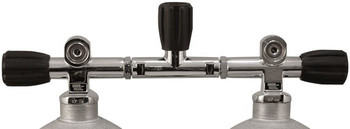
Manifold w/ Mod Valves 300 BAR
XS Scuba
$499.99Isolator and modular valves for twinning scuba tanks for backmount double tank scuba diving. Features: Includes modular valves (left and right) Includes isolator Available for various pressure ratings of tanks, DIN or International Pro Valve Tanks...1884$499.99
What to know about scuba tank valves
|
Yoke vs. DIN vs. International valve Burst disc — what it does and why it matters |
Valve o-ring — inspect before every dive Opening and closing the valve correctly |
Frequently asked questions
Should I buy a yoke or DIN valve for my tank?
For most Canadian recreational divers, a yoke valve is the practical choice — it is compatible with all standard rental regulators in North America and at tropical dive destinations worldwide, and most recreational regulators sold in Canada are configured as yoke first stages. DIN valves are the better choice if you dive regularly in Europe, if your regulator is DIN-equipped, or if you are pursuing technical diving where the more secure DIN connection is preferred or required. An International valve provides both options in one valve but adds a small amount of complexity. If you own a yoke regulator and a DIN valve tank, a spin-on DIN-to-yoke adapter is available — see our regulator parts section.
Can I replace my tank valve myself?
No — valve removal and replacement on a scuba cylinder must be performed by a qualified technician. The valve is torqued into the cylinder neck to a specific rating, and the internal threads and valve seat must be inspected during the process. An improperly installed valve can leak, seize, or in extreme cases cause catastrophic failure under pressure. Valve replacement is typically performed as part of an annual VIP inspection or when a valve is damaged. If your valve is leaking, stiff, or damaged, take the cylinder to a dive shop for assessment — do not attempt to remove or repair the valve yourself.
What is an isolator manifold and when is it used?
An isolator manifold is a connecting bar that joins two scuba cylinders side by side, sharing gas between both tanks through a central isolator valve. This configuration — commonly called doubles or a set of twins — is used in technical diving to provide a large total gas volume in a single back-mounted setup. The isolator valve in the centre can be closed to isolate one cylinder from the other if a valve or regulator on one side fails, preserving the gas in the remaining cylinder. Doubles manifolds are standard equipment for technical cave, wreck, and deep decompression diving. They require specific configuration knowledge and are not used in recreational diving setups.
How do I know if my tank valve o-ring needs replacing?
Inspect the o-ring visually every time you attach your regulator. A healthy o-ring is smooth, uniformly round in cross-section, and seated cleanly in the valve face groove. Replace the o-ring if you see any cuts, nicks, flat spots, deformation, embedded debris, or surface cracking. Also replace it if you notice any hissing or air leakage when the regulator is attached and the valve is opened — even a slow leak will drain your cylinder before the dive and indicates a compromised seal. Tank o-rings are inexpensive and available at any dive shop. Carrying a few spares in your save-a-dive kit is one of the simplest and most worthwhile precautions you can take.