


Lenses & Filters
Free Shipping across Canada! All orders over $150
Orders Processed and Shipping Fast!
We are Canadian! Orders shipped from our Edmonton warehouse
High Quality Gear - Divemaster & Instructor tested and approved
-


Sealife Lens Caddy
Sealife
$89.95The Sealife lens caddy will mount any Sealife DC series lens to the Sealife camera tray using a standard ¼-20 tripod screw or to any grip/arm up to 1.8" (45mm) in diameter using a sturdy hook & loop...3767$89.95 -
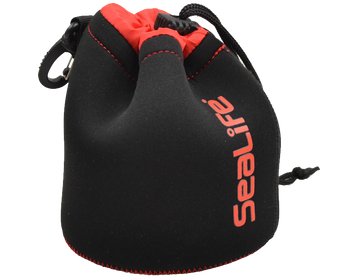
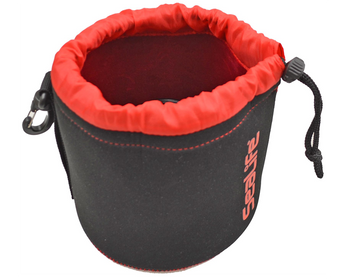
Sealife Pouch for Lens & Accessories
Sealife
$34.95Features: Protective pouch has a soft, velvet lined interior that will help prevent scratches and dings on sensitive optics, lenses, or electronics Perfect for protecting your cameras, lenses,...4101$34.95 -


Sealife Sportdiver Magenta Filter for Green Water
Sealife
$29.95The magenta color filter will help add color back to your photos and video when diving in green water, such as a fresh water lake or West coast of Canada. Snap on filter designed for the Sealife...4710$29.95 -

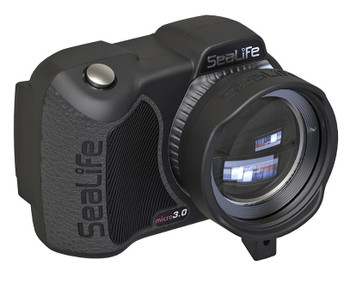
Sealife Close-up Lens for Micro and RM4K
Sealife
$129.99Get in closer and still focus your camera. This is a wet-connect lens that easily pushes on and off the camera right in the water. Help your camera focus on subjects from 6"to 24"underwater and 3...4678$129.99 -


Sealife Sportdiver Red Filter for Blue Water
Sealife
$29.95Colour correction filter for the Sealife Sportdiver and Sportdiver Ultra will help reduce the blue color from your photos and video. Features: The red filter is ideal for blue water at depths...5111$29.95 -


Sealife Super Macro Lens for Micro and RM4K
Sealife
$199.99Get closer with your pictures and video with the Super Macro Close up Lens. Made with a 2 element optical lens with anti reflective coating this lens has a rubber press on lens mount that can be...4679$199.99 -

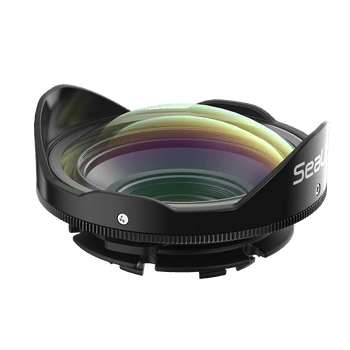
Sealife Micro Wide Angle Dome Lens for Micro & RM4K
Sealife
$599.00The Sealife Micro Wide Angle Dome Lens (0.7x wide-angle conversion) will work with the Sealife Micro-series cameras and the ReefMaster RM-4K camera. Features: Increases the camera's field of view...4472$599.00 -


Sealife Sportdiver Wide Angle Dome Lens
Sealife
$292.99This Wide Angle Dome Lens made for the SeaLife SportDiver underwater smartphone housing can increase your smartphone’s camera lens field-of view by 40%. This can allow a photographer to get closer to...4995$292.99 -
On Sale

Micro Pro Pack
Sealife
$699.00$760.00The Sealife Micro Pro Pack is a great addition to your Sealife Micro camera and video light setup. Includes: Wide Angle Dome Lens4898$699.00$760.00 -
On Sale

Sea & Sea Strobe Diffuser
Saekodive
$19.49$39.95Snap on Strobe diffuser for Sea & Sea YS-D1 100 strobeX3224m$19.49$39.95 -

Sealife 52mm Thread Mount Adapter
Sealife
$65.00The Sealife 52mm thread adapter (SL978) allows you to convert a 52mm thread to 67mm thread to adapt your camera lens. Made of durable anodized aluminum.3540$65.00
Frequently asked questions
What is a wet lens and how is it different from a standard camera lens?
A wet lens (also called an add-on or snap-on lens) attaches to the outside of a camera housing or directly to the front of a dedicated underwater camera using a bayonet mount. Unlike the fixed lens inside the camera, a wet lens can be added or removed between dives without surfacing — simply snap it on at the beginning of the dive, remove it and clip it to a BCD D-ring if you want to switch shooting styles, and snap it back on at any point. This makes wet lenses extremely practical compared to changing the actual camera lens or entering a housing underwater. Sealife produces wide-angle, macro, and red filter wet lenses specifically for their Micro camera series and SportDiver housing.
Do I need a wide-angle lens or a macro lens for underwater photography?
Wide-angle lenses are the most broadly useful first addition — they allow you to get closer to subjects while capturing more of the scene, which reduces the water column between camera and subject and produces cleaner, more colourful images. They suit reef scenes, large fish, marine mammals, divers in the frame, and most general underwater shooting. Macro lenses are for extreme close-up work — tiny subjects like nudibranchs, blennies in holes, shrimp on coral, and abstract reef textures that the standard lens cannot resolve at the short focus distances needed. .
What does a red filter do for underwater photography?
A red filter compensates for the blue-green colour cast that occurs when shooting in natural light at depth. Water absorbs red wavelengths progressively — at 5 metres most red is gone and below 10 metres orange and yellow begin disappearing too, leaving images with that characteristic blue-green underwater tint. A red filter over the lens adds back red transmission, partially compensating for this absorption and restoring more natural colour balance to images shot in ambient light. Red filters are most effective in the 3 to 15 metre depth range where there is enough natural light to work with and enough red absorption to compensate. Below 20 metres, natural light is so reduced that an artificial light source becomes necessary — at those depths a red filter alone is not sufficient and a video light or strobe is the better solution for colour restoration.